
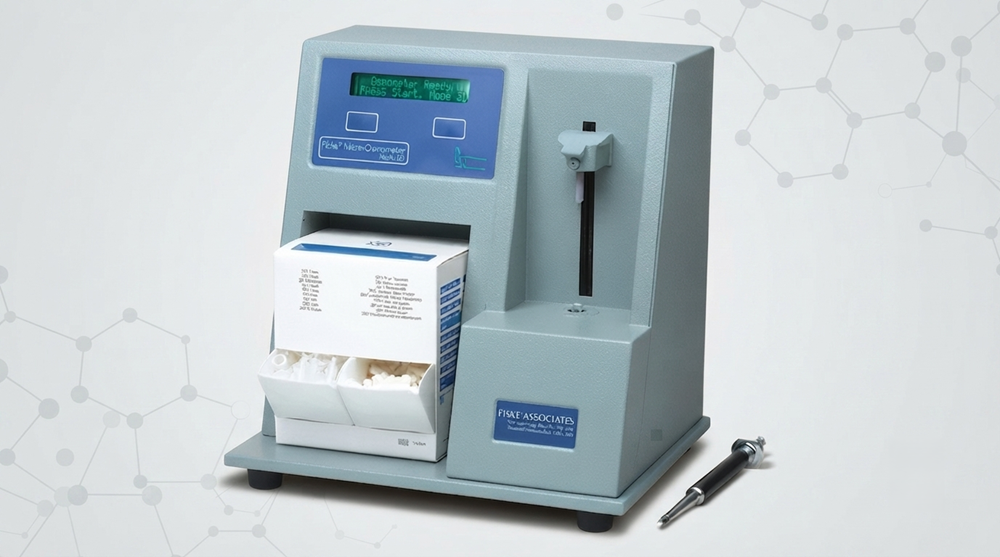
Osmometer Maintenance Service
We provide professional Osmometer Maintenance Services for freezing point osmometers used in medical, pharmaceutical, research, and industrial laboratories. Our experienced service team ensures accurate instrument performance, reliable operation, and extended equipment life through preventive maintenance, calibration checks, and technical support.
Our maintenance solutions cover single-sample osmometers with advanced diagnostics, performance verification, and system optimization. We provide comprehensive support across Pan India locations to minimize downtime and maintain accurate osmolality measurements for critical laboratory applications.
Service Specifications
| Service Name | Osmometer Maintenance Service |
|---|---|
| Osmometer Type Supported | Freezing Point |
| Sample Type | Serum, Plasma, Industrial Fluid, Urine |
| Sample Capacity | Single Sample |
| Measurement Range | 0 – 4000 mOsm/kg |
| Resolution | 1 mOsm/kg |
| Interface Support | RS232 |
| Service Location | Pan India |
| Application | Medical Industry & Laboratory Use |
Key Features
- Expert maintenance support for freezing point osmometers
- Calibration verification and performance optimization
- Preventive maintenance to improve instrument reliability
- Technical troubleshooting and fault diagnosis support
- Support for medical, pharmaceutical, and industrial laboratories
- Pan India service availability with professional technical assistance
Applications
Osmometer Maintenance Service is essential for clinical laboratories, hospitals, pharmaceutical companies, research institutions, and industrial facilities where accurate osmolality testing is required. Regular maintenance helps ensure consistent results for serum, plasma, urine, and industrial fluid analysis.
Service Process
Our maintenance process includes instrument inspection, cleaning, calibration verification, performance testing, troubleshooting, and necessary adjustments to ensure the osmometer operates within manufacturer specifications. Regular servicing improves measurement accuracy, reduces unexpected downtime, and increases the operational life of laboratory equipment.