
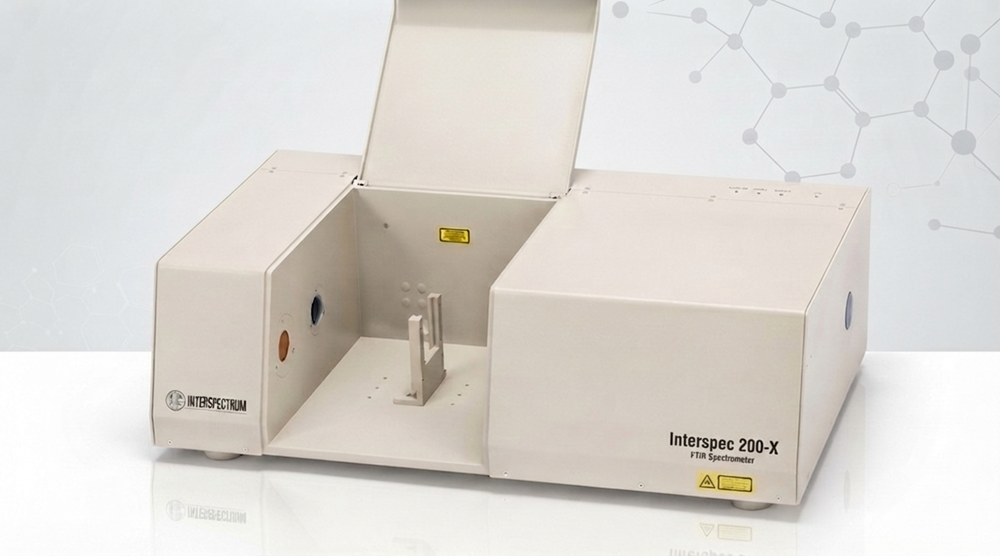
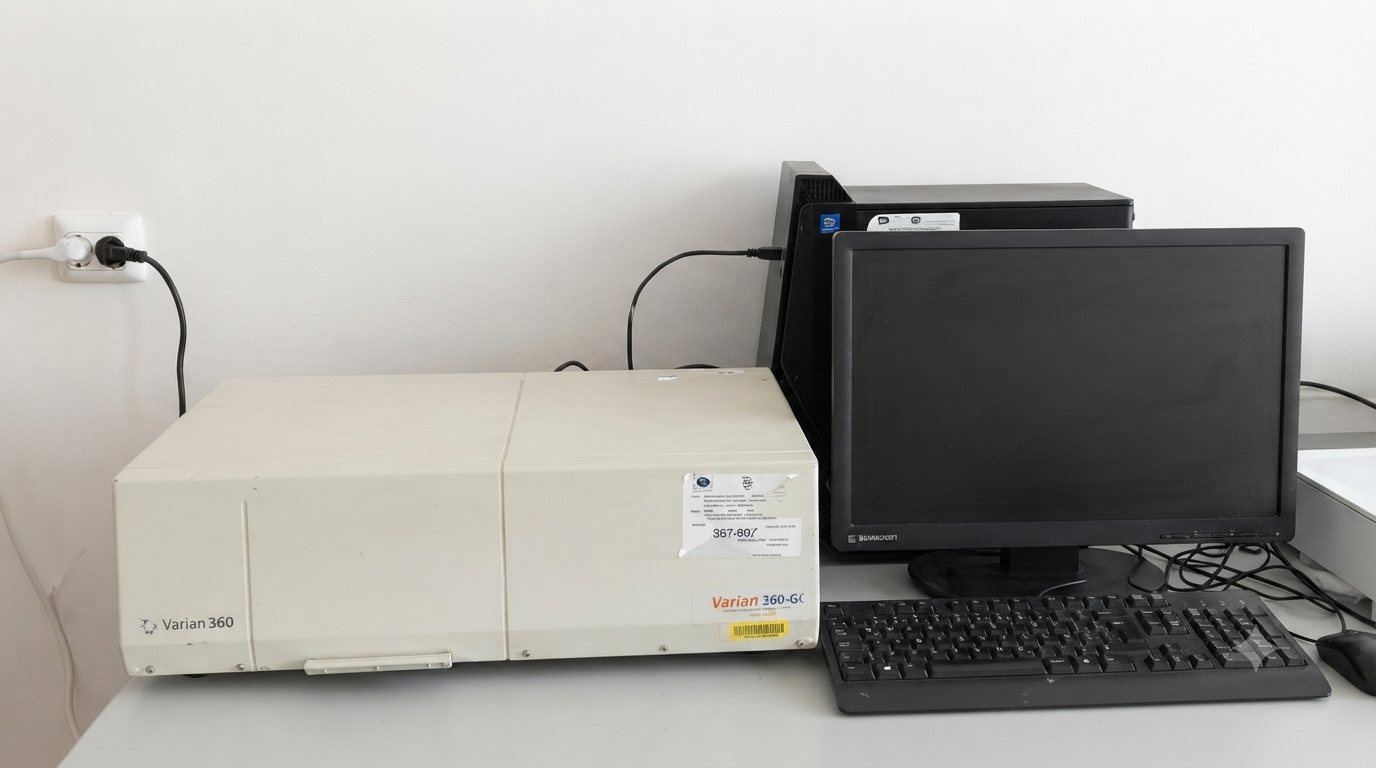
Benchtop FTIR / FTNIR Spectrometer
The Benchtop FTIR / FTNIR Spectrometer is a high-performance analytical instrument designed for rapid identification and characterization of organic and inorganic materials. Utilizing Fourier Transform Infrared (FTIR) and Fourier Transform Near-Infrared (FTNIR) technology, it delivers accurate qualitative and quantitative analysis for pharmaceutical, food, polymer, chemical, petroleum, academic, and research laboratories.
Featuring a double-beam optical system with a high-sensitivity DTGS detector, the spectrometer provides excellent spectral stability, reduced background noise, and reliable analytical performance. It supports multiple sampling techniques, making it suitable for a wide variety of laboratory applications.
Product Specifications
| Product Name | FTIR / FTNIR Benchtop Spectrometer |
|---|---|
| Form Factor | Benchtop |
| Spectral Range | 4000 – 400 cm-1 |
| Wavelength Range | 7000 – 400 cm-1 |
| Optical System | Double Beam |
| Beam Type | Dual Beam |
| Detector Type | DTGS |
| Mobility | Benchtop |
| Applications | Pharma, Food, Polymer, Chemical, Oil, Research & Academic |
| Packaging | Wooden Box |
Key Features
- High-performance FTIR/FTNIR spectroscopy for accurate material identification
- Double-beam optical system for enhanced accuracy and reduced background noise
- Wide spectral range with high-sensitivity DTGS detector
- Supports Transmission, Diffuse Reflectance, and ATR sampling techniques
- Ideal for pharmaceuticals, polymers, food, chemicals, and oil analysis
- Suitable for routine quality control, research, and academic laboratories
Applications
The Benchtop FTIR / FTNIR Spectrometer is extensively used in pharmaceutical, food processing, polymer, petrochemical, environmental, forensic, academic, and research laboratories for material identification, quality control, functional group analysis, raw material verification, trace gas analysis, and chemical characterization.
Working Principle
The spectrometer operates by passing infrared or near-infrared radiation through a sample and measuring the absorbed wavelengths. A double-beam optical system simultaneously compares the sample and reference beams, minimizing background interference and improving accuracy. The resulting spectrum acts as a unique molecular fingerprint, enabling rapid identification, characterization, and quantitative analysis of chemical compounds.